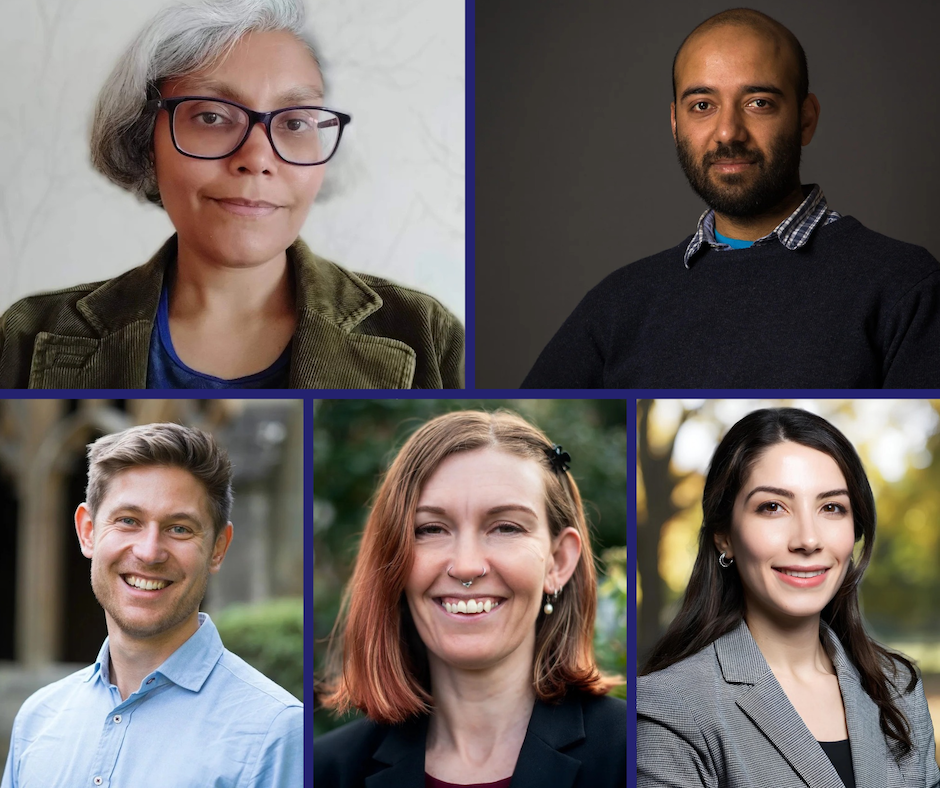
SENSE announces research grant recipients
Our Smart Energy Data Service – SENSE has announced the successful recipients of its inaugural research grants, supporting innovative research that uses data to address some of the UK’s most pressing energy and transport challenges.
The competitive grant programme provides funding of up to £40,000 per project, alongside access to the SENSE data platform and opportunities to collaborate with Energy Systems Catapult’s research and modelling teams.
This year’s successful projects will explore how data-driven research can help accelerate the UK’s transition to Net Zero.
Meet the recipients
Dr Siddharth Arora – University of Oxford
Dr Siddharth Arora’s project is Mobility-conditioned probabilistic forecasts of local NHS consumption.
Dr Arora says, “We’re very excited to receive this funding, and we eagerly look forward to working closely with the team at SENSE. By taking a fresh look at energy demand forecasting across healthcare facilities and the wider NHS system, we aim to support more informed decisions on the path to Net Zero and contribute to a more flexible energy system.”

Dr Emily Cox – Centre for Sustainable Energy (CSE)
Dr Emily Cox’s project is Development of an EV Transition-Double Energy Vulnerability (EVT-DEV) index.
Dr Cox says, “We’re delighted to have won this SENSE grant for research into the links between energy vulnerability and access to public EV charging. By combining detailed infrastructure and socioeconomic data, our aim is to produce practical evidence that helps prevent existing inequalities from becoming embedded in the infrastructure of the future”

Marcel Seger – Environmental Change Institute, University of Oxford
Marcel Seger’s project is Charging problems: where they concentrate, and how that tracks deprivation.
Marcel says,“I feel honoured that SENSE is entrusting us with this project to shed light on EV users’ charging experiences, an area that has so far been very difficult to research due to limited data access.
“Together with Lemonflow, our project partner, we will investigate the root causes of failed charging attempts at public charge points by analysing de-identified support contacts and mapping them in fine spatial detail across Great Britain to see whether some communities are affected more than others.
“Our insights will help policymakers and charge point operators understand and address the problems EV users face, with the aim of reducing barriers to EV adoption, an essential requirement for decarbonising the private transport sector.”

Professor Lina Stankovic – University of Strathclyde
Professor Lina Stankovic’s project is A graph-based data-driven framework for equitable electric vehicle placement.
She says, “Winning the SENSE grant is incredibly exciting and a fantastic opportunity to build on our previous work in equitable EV infrastructure planning. I’m particularly looking forward to exploring how data and AI can help identify where charging provision can have the greatest social impact, ensuring no community is left behind in the journey to Net Zero.”

Dr Zeynep Duygu Tekler – Loughborough University
Dr Zeynep Duygu Tekler’s project is VITALS: Variational Inference of Trust-level Activity from Load Signatures in NHS Hospitals.
She says, “I’m delighted to receive the SENSE Research Grant and to advance my research on AI for occupant-centric building operations and translate it to the complex challenge of decarbonising healthcare estates. Through VITALS, we will explore how hospital energy data can reveal otherwise invisible patterns of occupancy and activity, creating new opportunities for low-cost, occupant-aware decarbonisation across NHS estates.”