
Can we tell the difference between investing and gambling?
Using smart data to reveal how everyday trading can tip into gambling, and who is most at risk
Dr Leonardo Cohen | University of Reading | SDR UK Fellow
The challenge
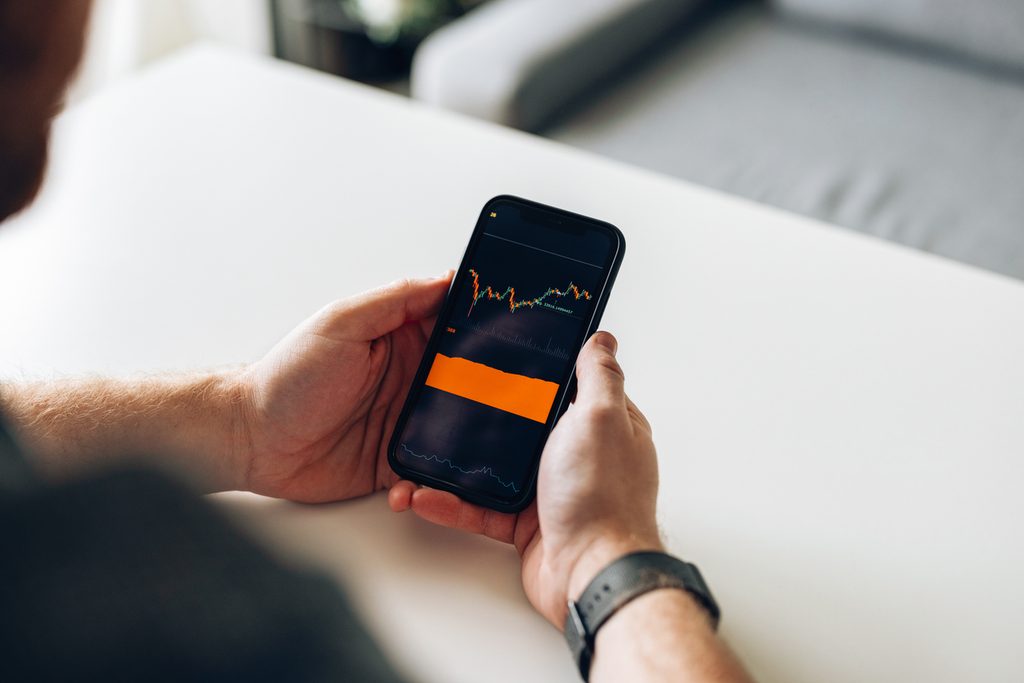
In recent years, financial trading apps have exploded in popularity and changed the personal finances of many people in the UK.
These apps let you buy and sell shares with relative ease, allowing most people to make investments that were once out of reach. But the same simplicity can also encourage risky financial behaviour. Leo’s research asks an important question: when does financial trading stop being about investing and start being about gambling, and who in our society is most at risk?
The idea
What if we could see from people’s real digital activity whether trading and investing has become more like gambling?
Until now, research into our digital behaviour has largely relied on self-reporting. But when it comes to gambling, few of us may recognise or want to admit that our activity has strayed from responsible investment decisions into a risky gambling habit.
Leo’s focus is speculative trading: buying and selling to profit from extreme short-term price swings, rather than an asset’s long-term slow-and-steady value.
Using data donated to the Smart Data Donation Service (SDDS), he is studying people’s real digital lives through app use and YouTube viewing data, as well as survey responses, to find out what people actually do online rather than just what they say or think they do. This will let him see whether people who trade also gamble online and, for the first time, study the two together as part of their wider financial behaviour.
Three things Leo will do
01 | Establish the overlap
Check whether people who use speculative trading apps also have gambling apps on their devices, and when and how often they use each.
02 | Understand influence
Investigate how YouTube financial trading videos, promoted as educational or aspirational, may encourage and normalise risky trading.
03 | Identify who is most at risk
Explore whether factors already tied to gambling harm, such as impulsivity, age, sex, income and loneliness can predict who gets drawn in by speculative trading. And also how far some trading behaviours, such as accessing the platform extremely frequently, are more closely related to gambling.
Why smart data?
People do not always tell the truth, or want to talk about their risky behaviour, especially on a survey about sensitive information such as money. A survey can only tell us what people are willing to admit.
App-use data shows us what people actually do, not just what they say or can correctly recall. It can reveal patterns self-reporting never would: using an app late at night, repeatedly, in a way that looks far more like gambling addiction than investing.
Smart data makes it possible to see real digital behaviour and habits, giving a far clearer picture than self-reporting alone ever could.
What could change?
Better evidence could support a change in policy and regulation.
Gambling is tightly regulated and must operate within safeguarding measures: deposit limits, signposting for addiction support, self-exclusion schemes. But because speculative trading is regulated as a financial activity rather than as gambling, it comes with none of these measures.
New products like prediction markets, which let people bet on real-world events but are sold as financial contracts, are blurring the line even further.
The research could help government, regulators and public health teams understand:
- whether people who trade are also gambling, and how closely the two behaviours are linked
- which socio-economic groups are most exposed to harm
- how social media drives gambling-like behaviour
- what type of protections should be put in place, and what can be learned from the gambling industry
The UK government’s 2023 Gambling White Paper passed over speculative trading altogether. The ambition of this work is to give policymakers the evidence to understand the problem and protect people.
Leo’s view
“There is a risk that trading platforms are selling gambling-like activities, disguised as investments, to individuals who don’t want to gamble. It is important to understand the overlap between the two activities.
Being able to see what people actually do, not what they think they do, will unlock new insights in how humans interact with new digital technologies.”
Working with SDR UK’s data services
Leo’s research will use data from SDR UK’s national data services, including (SDDS).
Through its MOSAIC study, thousands of UK adults have shared de-identified records of their app use and YouTube viewing, alongside a short wellbeing survey.
From research to action
The project is looking to make academic and societal impact, with its findings contributing to public health campaigns, raising awareness of risks and aiding the design of targeted interventions.
The aim is not simply to understand the problem. It is to give people, and policymakers, the evidence to act on it.
At a glance
Researcher
Dr Leonardo Cohen
Institution
University of Reading
Theme
Digital Society, Health and Wellbeing
Research period
2026 to 2027
SDR UK Fellowship
Up to £200,000
Working with
SDDS · MOSAIC · Experts-by-lived-experience
Smart Data Research UK would love to hear about your research!
Do you have a smart data case study to share? Contact our team at smartdataresearch@ukri.org to showcase your work.