Data informs Scotland’s path to net zero
Smart data exposes the gap between retrofit costs and household budgets
Meeting the UK’s net zero targets means solving a financial problem, not just a technical one. A new study from the University of Edinburgh, using consumer banking data from the Financial Data Service (FINDS), reveals how much homeowners can realistically afford to spend on energy upgrades, and what needs to change to make retrofitting achievable for all.
Why this matters
Homes account for more than a quarter of the UK’s energy use and around 20% of greenhouse gas emissions. In Scotland, which has committed to net zero by 2045, upgrading existing properties is essential — but most of the housing stock is old, inefficient, and expensive to retrofit.
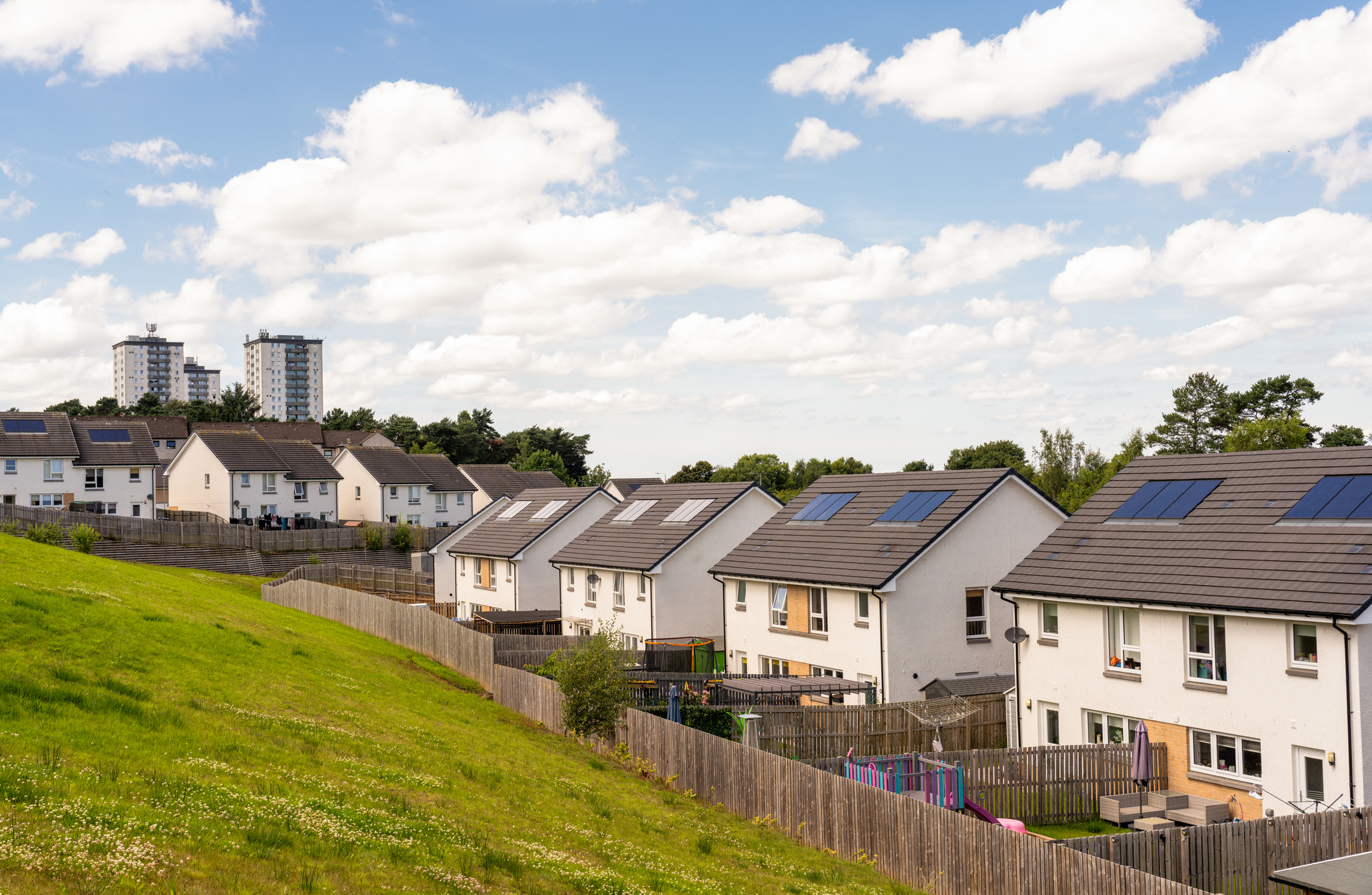
Retrofitting for a net zero home means upgrading an existing building to drastically reduce its energy consumption and carbon emissions. This includes adding insulation, upgrading windows, and replacing fossil fuel heating with low-carbon alternatives like heat pumps. Renewable energy sources, such as solar panels, meet the remaining energy needs so the house produces no net greenhouse gas emissions over a year.
What the researchers did
Researchers from the University of Edinburgh combined three data sources:
- Consumer banking data to estimate household disposable income
- Census data and energy performance certificates (EPCs) to calculate retrofit costs
- Real-world cost data from a social housing pilot project
They grouped homes into “archetypes” based on age, construction type, and wall materials. For each archetype, they modelled different retrofit options — from deep, high-impact upgrades to more modest improvements — and compared costs against what households could actually afford.
What they found
- Deep retrofits deliver the biggest energy savings but come with the highest upfront costs — well beyond what most households can afford without substantial grants.
- Medium-depth retrofits strike a better balance, focused on insulation and fabric improvements, they cut emissions significantly and can be made affordable through phased financing or targeted grants.
- Current funding schemes don’t fully bridge the gap, leaving many households — especially those in older, harder-to-treat homes — at risk of being left behind
What this means for policy
The research shows which types of homes need the most support and what different households can realistically afford. This makes it possible to design targeted grant schemes and reduce uncertainty for homeowners planning upgrades.
The bottom line
Scotland can’t meet its net zero targets without making retrofits affordable. This research shows where the gaps are — and what support is needed to close them.
Powered by SDR UK infrastructure
This study demonstrates the value of SDR UK’s data infrastructure. By providing secure, privacy-protected access to consumer banking data, researchers can answer questions that census data or surveys alone cannot — like what households can actually afford, not just what they earn or spend on average.
Project information
This project was funded through a £120,000 research partnership with the Edinburgh Centre for Financial Innovations, supported by the University’s Major Initiatives Fund
For further details, contact:
Dr Julio Bros-Williamson – j.broswilliamson@ed.ac.uk
Smart Data Research UK would love to hear about your research!
Do you have a smart data case study to share? Contact our team at smartdataresearch@ukri.org to showcase your work.